Why Freelancing Is Booming
The freelance economy is worth over $1.5 trillion globally, and it is growing every year. With remote work now mainstream, businesses of all sizes are hiring freelancers for specialized skills. Whether you are a designer, developer, writer, marketer, or consultant — there is demand for your expertise.
Setting Up Your Freelance Business
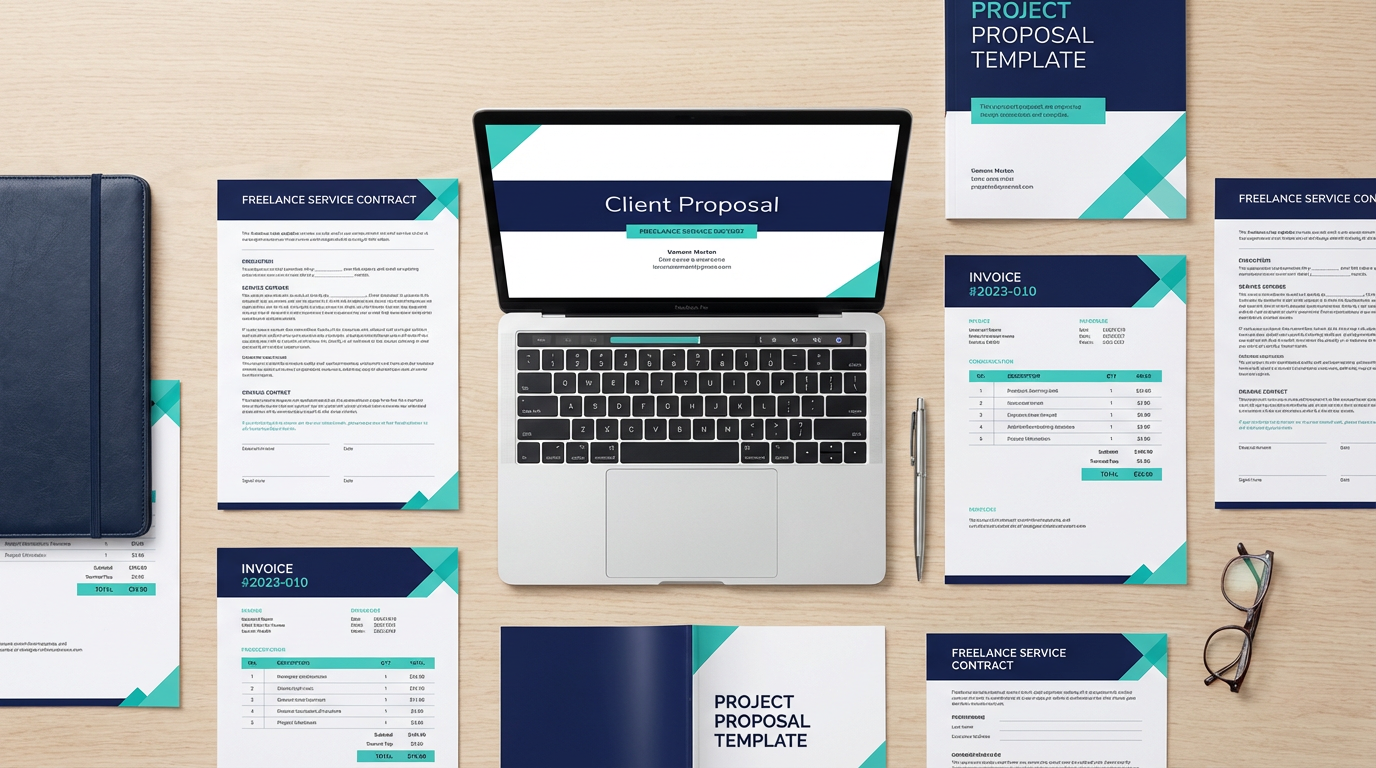
Freelancer Business Starter Pack
Professional proposals, contracts, invoices, and client management tools for freelancers.
Step 1: Define Your Niche
The biggest mistake new freelancers make is trying to serve everyone. Specialization allows you to:
- Charge higher rates (specialists earn 2-3x more than generalists)
- Attract better clients who value expertise
- Build a reputation faster in a specific area
- Create more targeted marketing
How to find your niche:
- What skills do you have that others would pay for?
- What industries interest you most?
- Where is there high demand and limited supply?
- What problems can you solve that create measurable value?
Step 2: Set Your Pricing
Three pricing models:
- Hourly rate: Simple but limits your income to hours worked
- Project-based: Better for both you and clients — scope is clear
- Value-based: Charge based on the value you deliver, not time spent (highest earning potential)
How to calculate your minimum rate:
- Annual income goal: $80,000
- Billable hours per year (realistic): 1,200
- Minimum hourly rate: $67/hour
- Add 20% for taxes and benefits: $80/hour
Step 3: Legal and Financial Setup
- Register as an LLC: Protects personal assets, looks professional
- Get an EIN: Free from the IRS, needed for business banking
- Open a business bank account: Separate personal and business money
- Set aside 25-30% for taxes: Self-employment tax is real
- Get professional liability insurance: Protects against client disputes
- Track all expenses: Use accounting software from day one
Step 4: Build Your Portfolio
You need work samples before you can land clients:
- Create spec projects for dream clients
- Offer discounted work to 2-3 initial clients in exchange for testimonials
- Contribute to open source or community projects
- Document any relevant work from previous employment (with permission)
Step 5: Create Client Systems
Essential documents:
- Proposal template: How you pitch to new clients
- Contract: Scope, timeline, payment terms, intellectual property rights
- Invoice template: Professional and consistent
- Onboarding questionnaire: Collect project details upfront
- Project brief: Align on deliverables before starting work
Tools you need:
- Time tracking (Toggl, Harvest)
- Invoicing (Wave, FreshBooks)
- Project management (Notion, Asana)
- Communication (Slack, Zoom)
- File storage (Google Drive, Dropbox)
Finding Your First Clients
Direct Outreach
- Identify 50 businesses that could use your services
- Send personalized emails explaining how you can help
- Follow up 2-3 times (most responses come from follow-ups)
Freelance Platforms
- Upwork (largest marketplace)
- Toptal (for top talent)
- Fiverr (good for building portfolio)
- LinkedIn ProFinder
Networking
- Attend industry events and meetups
- Join online communities (Slack groups, Discord servers)
- Ask for referrals from every happy client
Content Marketing
- Blog about your expertise
- Share insights on LinkedIn
- Create case studies from client work
Scaling Beyond Solo Freelancing
Free: Business Launch Checklist
50 essential steps to launch your business. Get it free.
Once you are consistently booked, you have options:
- Raise your rates: The simplest path to more income
- Productize your service: Turn your process into a standardized package
- Subcontract: Bring on other freelancers to handle overflow
- Create digital products: Templates, courses, or tools based on your expertise
- Build an agency: Hire a team and scale to multiple clients
Get the Complete Starter Kit
Our Freelancer Business Starter Pack includes contract templates, proposal frameworks, invoice templates, client onboarding checklists, and pricing calculators — everything you need to run a professional freelance business from day one.
FAQ
How long does it take to replace a full-time income with freelancing?
Most freelancers take 6-12 months to match their previous salary. Some achieve it faster with strong networks and in-demand skills.
Should I quit my job to freelance?
Start freelancing on the side while employed. Build up 3-6 months of savings and a pipeline of clients before going full-time.
How do I handle difficult clients?
Clear contracts and upfront communication prevent most issues. For ongoing problems, set boundaries firmly and professionally. Some clients are not worth keeping.