Why Pricing Is Your Most Powerful Lever
A 1% improvement in pricing leads to an 11% increase in profit on average. Yet most entrepreneurs spend more time choosing their logo color than their pricing strategy. Getting pricing right is one of the highest-impact decisions you will make.
Common Pricing Strategies
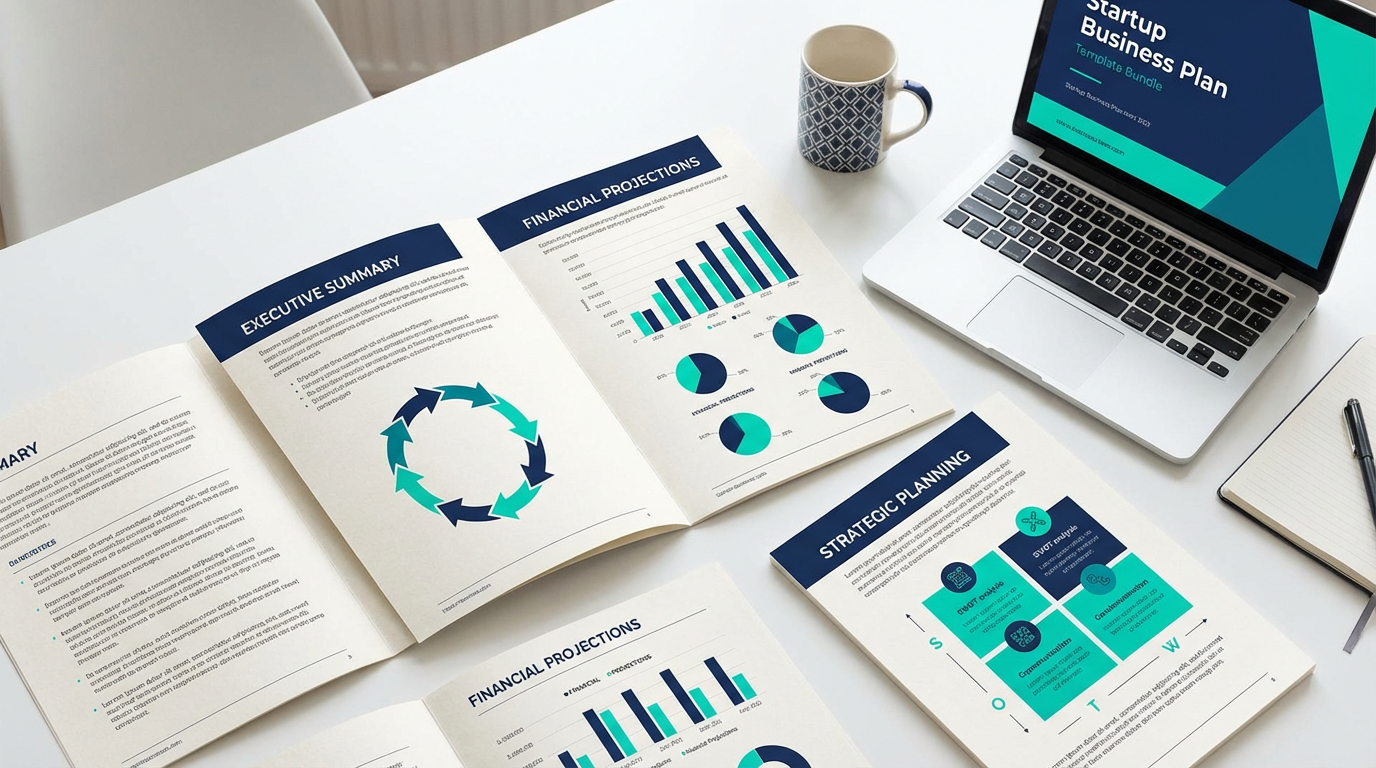
Startup Business Plan Template Bundle
Complete business plan templates for startups — executive summary, market analysis, financial projections, and more.
1. Cost-Plus Pricing
Formula: Total Cost + Markup Percentage = Price
This is the simplest method. Calculate your costs, add a margin, and that is your price.
Example: Product costs $20 to make. With a 50% markup, you sell for $30.
Pros: Simple, ensures you cover costs
Cons: Ignores what customers are willing to pay, may leave money on the table
Best for: Physical products, manufacturing, retail
2. Competitive Pricing
Method: Price based on what competitors charge
Research your competitors and position yourself:
- Below competitors: Win on price (risky, race to the bottom)
- Match competitors: Compete on other factors (service, quality, brand)
- Above competitors: Position as premium (requires differentiation)
Pros: Market-tested price points
Cons: Assumes competitors priced correctly, can start price wars
Best for: Commoditized markets, entering established categories
3. Value-Based Pricing
Method: Price based on the value your product delivers to the customer
This is the most profitable approach but requires understanding your customer deeply.
Example: Your financial template saves a business owner 20 hours of work. If their time is worth $100/hour, you are saving them $2,000. Pricing your template at $59 is a no-brainer for the customer — and highly profitable for you.
Pros: Highest margins, aligned with customer outcomes
Cons: Requires deep customer understanding, harder to calculate
Best for: Digital products, services, B2B, anything with measurable ROI
Pricing Psychology
The Power of 9
Prices ending in 9 ($29, $49, $99) consistently outperform round numbers. A study found that a product priced at $39 outsold the same product at $34.
Anchoring
Show a higher price first to make your actual price feel like a deal:
- ~~$199~~ $79 (strikethrough pricing)
- "Compare at $150" positioning
- Premium tier listed first, drawing attention to the value tier
Tiered Pricing
Offering 3 options (Good, Better, Best) works because:
- Most people choose the middle option
- It gives customers a sense of control
- The premium tier makes the middle feel reasonable
- The basic tier captures price-sensitive buyers
Bundle Pricing
Combining products at a discount increases average order value:
- Individual templates: $49 each
- Bundle of 5: $149 (save $96)
- Customers feel they are getting more value
- You increase revenue per transaction
How to Find Your Optimal Price
Free: Business Launch Checklist
50 essential steps to launch your business. Get it free.
Step 1: Calculate Your Floor Price
Add up all costs:
- Direct costs (materials, production, delivery)
- Indirect costs (marketing, tools, hosting)
- Your time at a fair hourly rate
- Desired profit margin
This is your minimum price — never go below it.
Step 2: Research the Ceiling
What is the maximum someone would pay?
- Survey potential customers
- Analyze competitor pricing (especially premium options)
- Consider the value delivered in dollars saved or earned
Step 3: Test in the Middle
Start at the midpoint between your floor and ceiling. Then test:
- A/B test two price points on your sales page
- Run limited-time promotions to gauge price sensitivity
- Ask customers if they would have paid more
Step 4: Raise Prices Regularly
Most entrepreneurs undercharge. Consider raising prices:
- When demand exceeds supply
- After adding significant features or value
- When customer feedback is overwhelmingly positive
- Every 6-12 months as a standard practice
Digital Product Pricing Guidelines
| Product Type | Typical Price Range |
|---|---|
| Templates and worksheets | $15-49 |
| Template bundles | $49-149 |
| Online courses (mini) | $29-97 |
| Online courses (comprehensive) | $197-997 |
| E-books | $9-29 |
| Software tools | $9-49/month |
| Consulting templates | $49-199 |
Get Your Pricing Right
Our Startup Business Plan Template Bundle includes pricing strategy worksheets, competitive analysis frameworks, and financial projection tools to help you find the perfect price point for maximum profitability.
FAQ
Should I offer discounts?
Use discounts strategically for launches, holidays, or email subscribers. Avoid constant discounting — it trains customers to wait for sales.
How do I raise prices without losing customers?
Grandfather existing customers at their current rate. Announce price increases in advance. Add value alongside the increase.
Is it better to price high or low?
Start at the higher end. It is easier to lower prices than to raise them. Premium pricing also attracts better customers who value quality.